
When your boiler starts showing problems, one of the most important decisions you will face is whether to repair it or replace it completely. For homeowners in Manchester, where heating is essential for most of the year, this decision directly affects comfort, safety, and long-term costs.
A boiler is a long-term investment, and choosing the wrong option can lead to repeated breakdowns, higher energy bills, and unnecessary expenses. That is why understanding the difference between repair and replacement is essential before making a decision.
This guide explains everything in simple terms so you can confidently decide what is best for your home.
Understanding the Difference Between Boiler Repair and Replacement
Before comparing both options, it is important to clearly understand what they mean.
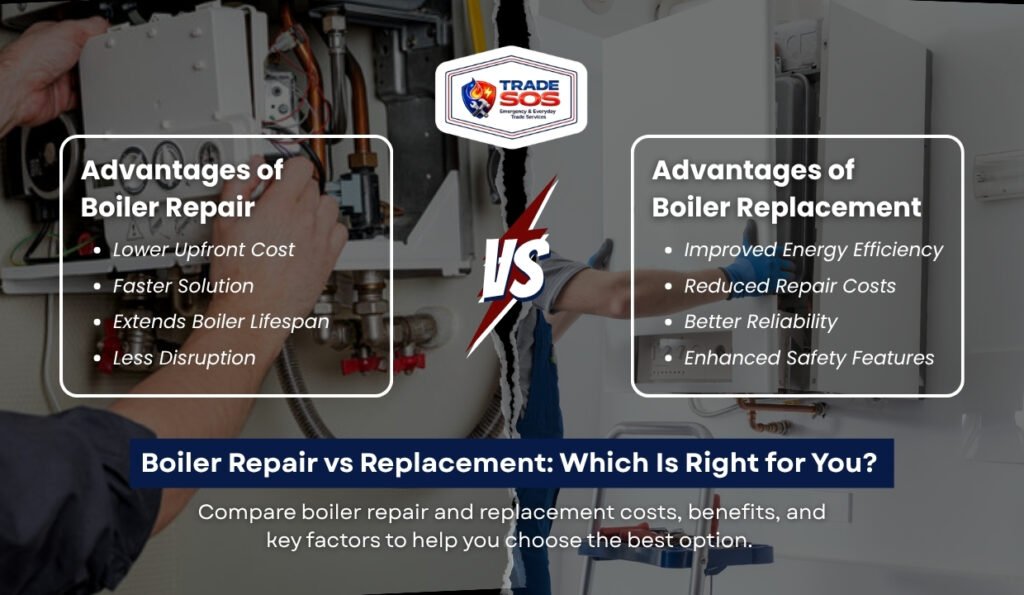
Boiler Repair
Boiler repair means fixing a specific fault in your existing system. This could involve replacing a part, fixing a leak, or resolving a performance issue.
It is usually:
- Faster
- Cheaper (in the short term)
- Suitable for minor or moderate faults
Boiler Replacement
Boiler replacement involves removing your old system and installing a brand-new boiler.
It is:
- More expensive initially
- A long-term solution
- More energy efficient and reliable
When Boiler Repair Is the Right Choice
Repair is not always a temporary fix—it can be the best solution in many situations, especially when the boiler is still in good condition.
1. Your Boiler Is Still Relatively New
If your boiler is under 8–10 years old, repair is usually the best option.
Modern boilers are designed to last 10–15 years, so early replacement is often unnecessary unless there is major damage.
Common repairable issues include:
- Faulty thermostats
- Pressure loss
- Pump or valve issues
- Ignition faults
These are typically affordable and quick to fix.
2. The Fault Is Minor or Isolated
If only one part of your boiler is damaged, there is no need to replace the whole system.
Examples of minor faults:
- Small water leaks
- Broken sensors
- Blocked pipes
- Electrical connection issues
In such cases, a professional engineer can repair the specific component and restore full functionality.
3. Boiler Has Been Properly Maintained
A well-maintained boiler has a longer life and fewer serious problems.
If you have:
- Annual servicing
- Regular safety checks
- Timely minor repairs
Then your boiler is more likely to be repairable instead of replaceable.
4. Repair Cost Is Reasonable
A key rule used by professionals:
If repair cost is less than 30–40% of a new boiler, repair is usually worth it.
This makes repair a cost-effective short-term solution.
When Boiler Replacement Is the Better Option
Sometimes repairing a boiler is not financially or practically sensible. In these cases, replacement becomes the smarter long-term choice.
1. Your Boiler Is Old (10–15+ Years)
Older boilers naturally lose efficiency over time.
Signs of aging include:
- Slow heating
- Frequent breakdowns
- Higher gas usage
- Noisy operation
At this stage, repairs may only provide temporary relief.
2. Frequent Breakdowns
If your boiler keeps breaking down repeatedly, repair costs can quickly add up.
Warning signs:
- Multiple repairs in one year
- Same issue recurring
- Temporary fixes not lasting
In such cases, replacing the boiler is often more cost-effective.
3. Rising Energy Bills
One of the biggest signs that replacement is needed is increasing energy bills.
Older boilers consume more fuel because:
- Efficiency decreases over time
- Internal components wear out
- Heat loss increases
Modern boilers are much more energy efficient and can significantly reduce monthly bills.
4. Expensive Repair Costs
If the repair cost is very high, replacement is usually better.
Examples of expensive faults:
- Heat exchanger failure
- Major internal corrosion
- PCB (circuit board) damage
- Repeated pump failure
When repairs approach the cost of a new boiler, replacement makes more sense.
5. Safety Concerns
Safety should always come first.
You should consider replacement if:
- There are gas leaks
- Carbon monoxide risks exist
- Boiler overheats frequently
- Burning or unusual smells appear
Modern boilers come with advanced safety features that reduce these risks significantly.
Cost Comparison: Repair vs Replacement
Boiler Repair Costs
Repair costs vary depending on the issue:
- Minor repairs: low cost
- Moderate repairs: medium cost
- Major repairs: high cost
While repair seems cheaper initially, repeated breakdowns can increase total cost over time.
Boiler Replacement Costs
Replacement involves higher upfront costs, including:
- New boiler unit
- Installation charges
- Possible system upgrades
However, it reduces:
- Future repair costs
- Energy bills
- Maintenance issues
So, long-term savings are often significant.
Energy Efficiency Comparison
Old Boiler:
- Lower efficiency
- More fuel consumption
- Higher energy bills
- Slower heating
New Boiler:
- High efficiency (A-rated systems)
- Faster heating
- Lower gas usage
- Reduced monthly bills
Energy efficiency is one of the biggest reasons homeowners choose replacement.
Lifespan Factor
- Repair extends life temporarily
- Replacement gives a fresh 10–15+ year lifespan
If your boiler is already near the end of its life, replacement is the more practical option.
Environmental Impact
Modern boilers are designed to be more environmentally friendly.
Replacement benefits include:
- Lower carbon emissions
- Reduced energy waste
- Better compliance with UK efficiency standards
This makes replacement a more eco-friendly choice.
Key Signs You Should Replace Your Boiler
You should strongly consider replacement if you notice:
- Boiler older than 12–15 years
- Constant breakdowns
- High energy bills
- Uneven heating
- Loud noises
- Expensive repairs
These are clear indicators that repair is no longer cost-effective.
Professional Advice Matters
A Gas Safe registered engineer can inspect your boiler and help you decide based on:
- Age and condition
- Repair history
- Efficiency level
- Safety status
- Cost comparison
Professional evaluation ensures you don’t spend money unnecessarily.
Boiler Situation in Manchester Homes
In Manchester, boilers are heavily used due to long winters. This leads to:
- Faster wear and tear
- Higher breakdown rates
- Increased maintenance needs
That is why homeowners in the region often reach the repair vs replacement decision earlier than in warmer areas.
Final Decision Guide
Choose Repair If:
- Boiler is under 10 years old
- Problem is minor
- Repair cost is low
- System is generally efficient
Choose Replacement If:
- Boiler is old or inefficient
- Repairs are frequent
- Energy bills are rising
- Safety is a concern
Conclusion
Deciding between boiler repair and replacement depends on the age, condition, and performance of your system. Repair is ideal for newer boilers with minor issues, while replacement is a smarter long-term investment for older or frequently failing systems.
For homeowners in Manchester, where heating demand is high, making the right choice ensures comfort, safety, and financial savings.
Always consult a qualified heating engineer before making a final decision, as professional advice can help you avoid unnecessary costs and ensure long-term reliability.